Discover the breathtaking beauty of the Dingle Peninsula, where dramatic cliffs, golden beaches, ancient history and the wild Atlantic Ocean combine to create one of Ireland’s most unforgettable scenic drives.
There are few journeys in Ireland as beautiful or memorable as the Slea Head Drive on the Dingle Peninsula in County Kerry.
Following the rugged western coastline of the peninsula, this spectacular circular route takes visitors through some of the most breathtaking scenery along Ireland’s Wild Atlantic Way.
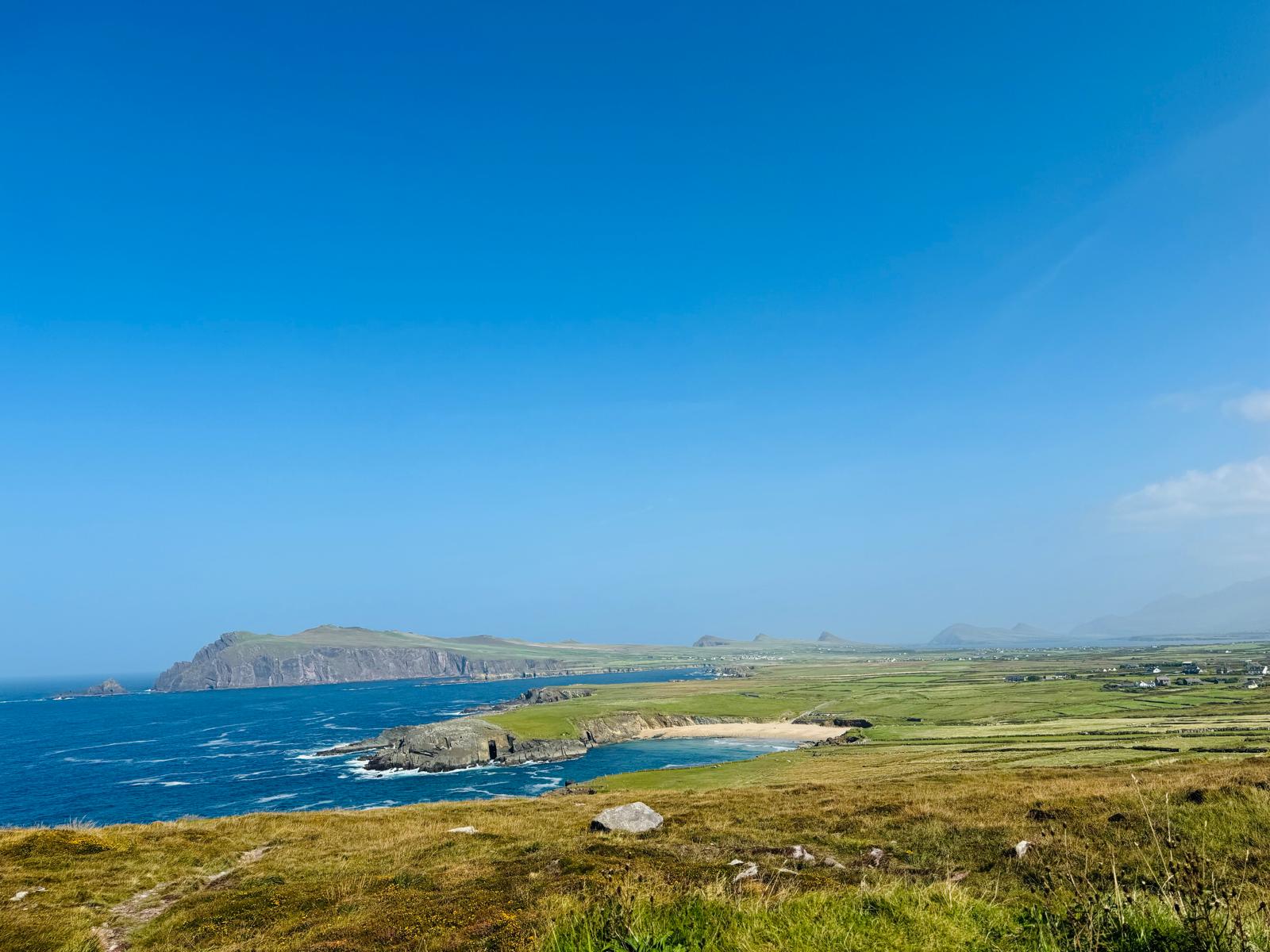
Here, towering cliffs rise above the Atlantic Ocean, narrow roads wind between traditional stone walls, and golden beaches lie sheltered beneath green hills. Offshore, the magnificent Blasket Islands stand as silent witnesses to centuries of Irish history.
For visitors staying in Dingle, the Slea Head Drive is an experience not to be missed.
A Journey Along the Edge of the Atlantic
The Slea Head Drive, also known as the R559 coastal route, begins and ends in Dingle town.
The journey is approximately 47 kilometres, although its many beautiful stopping points mean that visitors should allow at least three to four hours, and preferably longer, to appreciate everything along the way.
Travelling clockwise is generally recommended, particularly during the busy tourist season, as it follows the usual direction of tour traffic along some narrow sections of road.
Almost immediately after leaving Dingle, the landscape begins to reveal its extraordinary beauty.
The road follows the coastline past green fields, rugged headlands and ancient stone walls, with magnificent views stretching across Dingle Bay and the Atlantic Ocean.
Every bend brings another opportunity to stop, admire the scenery and take photographs.
Ventry – A Beautiful Beginning
One of the first highlights of the journey is Ventry, or Ceann Trá, a charming coastal village situated beside a magnificent crescent-shaped beach.
<AsyncImageGroup query={[“Ventry beach Ceann Tra Dingle Peninsula long golden sandy beach Kerry Ireland”]} aspectRatio=”16:9″/>
Ventry Beach stretches along the sheltered waters of Ventry Harbour, offering a beautiful contrast to the more rugged Atlantic coastline further west.
Its golden sands and surrounding green hills make it a wonderful place for a leisurely walk.
On calm days, the water reflects the changing colours of the sky, while the surrounding countryside provides a peaceful introduction to the natural beauty of the peninsula.
Slea Head – Where Ireland Meets the Atlantic
As the road continues westward, the scenery becomes increasingly dramatic.
At Slea Head itself, the Atlantic Ocean stretches endlessly towards the horizon, while rugged cliffs and rocky headlands create one of the most spectacular landscapes in Ireland.
<AsyncImageGroup query={[“Slea Head viewpoint crucifix Atlantic Blasket Islands County Kerry Ireland dramatic coastal scenery”]} aspectRatio=”16:9″/>
This is one of the westernmost parts of mainland Ireland, and standing here gives visitors a wonderful sense of the peninsula’s remoteness and beauty.
On a clear day, the views extend towards the Blasket Islands, with the Atlantic sparkling beneath the sunlight.
During stormier weather, powerful waves crash against the rocks, revealing the raw energy of the ocean.
It is a place where nature feels wonderfully powerful and untouched.
Coumeenoole Beach – A Hidden Treasure
One of the most beautiful locations along the Slea Head Drive is Coumeenoole Beach.
<AsyncImageGroup query={[“Coumeenoole Beach Dunmore Head Dingle Ireland golden sand green cliffs turquoise Atlantic”]} aspectRatio=”16:9″/>
Tucked beneath steep grassy cliffs, this spectacular beach is surrounded by some of the most dramatic coastal scenery on the peninsula.
The golden sand contrasts beautifully with the turquoise and deep blue waters of the Atlantic.
A walk down towards the beach provides an opportunity to appreciate its extraordinary setting, while the surrounding viewpoints offer magnificent photographic opportunities.
Coumeenoole is particularly beautiful when the evening sunlight illuminates the cliffs and sea.
Although the beach is breathtaking, swimming is dangerous because of strong currents and powerful waves. It is best enjoyed for walking, sightseeing and photography.
Dunquin Pier – One of Ireland’s Most Iconic Views
Further along the coastal route lies Dunquin Pier, or Cé Dhún Chaoin, one of the most recognisable landmarks on the Dingle Peninsula.
<AsyncImageGroup query={[“Dunquin Pier Ce Dhun Chaoin winding concrete path cliffs Blasket Islands Ireland”]} aspectRatio=”16:9″/>
The narrow, winding pathway descends dramatically between steep cliffs towards the Atlantic Ocean.
Beyond the pier, the Blasket Islands rise from the sea, creating a scene that has become famous throughout the world.
The views are especially striking on clear days, when the islands appear against the deep blue Atlantic.
Dunquin Pier also holds an important place in the history of the peninsula, having served as a connection between the mainland and the Great Blasket Island.
Today, it remains one of the most photographed locations in County Kerry.
Visitors should walk rather than drive down the steep pier access.
The Blasket Islands – A Remarkable Irish Heritage
Just offshore lie the Blasket Islands, a group of islands renowned for their natural beauty, wildlife and extraordinary cultural history.
<AsyncImageGroup query={[“Great Blasket Island Dingle Peninsula abandoned village green island Atlantic Kerry”]} aspectRatio=”16:9″/>
The Great Blasket Island was once home to a small Irish-speaking community whose traditional way of life inspired some of Ireland’s most celebrated literature.
Writers such as Peig Sayers, Tomás Ó Criomhthain and Muiris Ó Súilleabháin recorded the experiences, hardships and traditions of island life.
The island’s permanent settlement was evacuated in 1953, but its history remains an important part of Ireland’s cultural heritage.
Visitors can learn more about this remarkable community at the Blasket Centre in Dún Chaoin.
Weather permitting, boat trips to the Great Blasket Island offer another opportunity to experience the beauty and history of this extraordinary place.
Ancient History Along the Coastal Road
The Slea Head Drive is not only a journey through magnificent scenery. It is also a journey through thousands of years of Irish history.
The surrounding landscape contains ancient stone forts, early Christian monuments and traditional beehive-shaped stone huts.
These remarkable structures are reminders of the generations who lived and worked on the peninsula long before modern roads and tourism arrived.
The area’s historic settlements, archaeological remains and Irish-language traditions give the journey a depth of character that makes it much more than an ordinary scenic drive.
Ballyferriter and the Beauty of the Northern Coast
Continuing around the peninsula, visitors reach the Ballyferriter area, where the landscape changes once again.
<AsyncImageGroup query={[“Ballyferriter Dingle Peninsula Three Sisters cliffs Atlantic green fields Kerry Ireland”]} aspectRatio=”16:9″/>
Rolling green fields stretch towards the Atlantic, while rugged cliffs and distant mountain views create a wonderfully peaceful atmosphere.
The nearby Three Sisters headlands form one of the distinctive features of the northern coastline.
This part of the peninsula is rich in Irish language and culture, with traditional place names and local heritage remaining an important part of everyday life.
The quieter roads and open countryside provide a beautiful contrast to the dramatic cliffs of Slea Head.
The Magic of the Changing Seasons
One of the remarkable things about the Slea Head Drive is that it is beautiful throughout the year.
In spring, the fields become vibrant green and wildflowers brighten the roadside.
During summer, long evenings provide wonderful opportunities to explore the beaches and coastal viewpoints.
Autumn brings softer light, changing colours and quieter roads.
Winter reveals the wildest side of the Atlantic, when powerful waves and dramatic skies transform the coastline into an unforgettable spectacle.
No two journeys are ever quite the same.
Take Your Time and Enjoy the Journey
The Slea Head Drive is not a route to be hurried.
Although it is possible to complete the circuit in a relatively short time, its true beauty lies in stopping along the way.
Walk on the beaches, admire the cliffs, discover the history, enjoy a coffee in a local village and take time to appreciate the extraordinary surroundings.
For photography enthusiasts, the changing Atlantic light offers endless opportunities.
For families, couples and groups of friends, the journey provides wonderful shared memories.
And for anyone seeking the natural beauty of Ireland, Slea Head is an experience that will remain with them long after their holiday has ended.
Explore Slea Head from Teach Eoin, Dingle
One of the great advantages of staying in Dingle town is the ease of exploring the surrounding peninsula.
Teach Eoin, a spacious five-bedroom self-catering townhouse in central Dingle, provides an ideal base for discovering the Slea Head Drive and the many other attractions of the Wild Atlantic Way.
Accommodating up to ten guests, Teach Eoin is particularly suited to families and groups of friends wishing to enjoy the freedom of their own holiday home.
Spend the day discovering spectacular cliffs, hidden beaches, ancient history and breathtaking Atlantic views.
Then return to Dingle town to enjoy its excellent restaurants, welcoming traditional pubs and lively music scene.
With everything close at hand, visitors can enjoy the best of both worlds — the extraordinary natural beauty of the Dingle Peninsula and the charm of staying in the heart of Dingle.
Slea Head is more than a scenic drive. It is a journey through the landscapes, history and spirit of Ireland’s Atlantic coast.
And there is no better place to begin that journey than Dingle.
Teach Eoin – Your Own Townhouse in Dingle. Stay in the Heart of It.
Book your accommodation directly at www.teacheoindingle.com.
Ireland’s Most Spectacular Coastal Journeys
Great information